As well as this blog, I also have a website and Instagram page with lots more images of my work as well as a few more stories.
If you like woodcarvings, you might want to have a look.
Showing posts with label oak. Show all posts

Thursday, 9 March 2023

Documenting the hidden world of the bell ringers: making a peal board


Peal board at st James church Mangotsfield

What is a peal board?

Well, before this commission in 2022 I'd never heard of one either. Making it gave a chance to see a tiny glimpse of something that most people outside of bell ringing never see. In this post we go up the stairs in the church tower, through a small door and into the bell loft to have a glimpse at the hidden world of the bell ringers.


Bell ringing ropes hanging in the bell loft of St James' church, Mangotsfield

Bells are traditionally rung to call people to worship in Christian churches in Britain. Ringing developed from the use of a single bell to several, which are rung in complicated patterns that require a lot of skill from all participants to play accurately. Each ringer in the tower will play a single bell by pulling on a rope to make it swing, so that the sound fits in with the pattern being played.

A peal board is a wooden panel made to record special sessions of bell ringing. These sessions may last for two or more hours and are done very occasionally to commemorate particular events or people, usually having a close connection to that church or bell ringing group. The board shows information such as who rang the peal, what pattern was rung and who or what was being commemorated amongst other things.

The commissioned board was made from a solid oak panel fitted into an oak frame and will be hung alongside others in the bell loft, where the ropes used in ringing hang down from the bells above. You can see some other boards and bell ropes in the picture above, along with images of previous bell ringers and Tower Captains (head bell ringers) associated with the church of St James, in Mangotsfield on the edge of Bristol.


bell ringers rules


I was commissioned by Jon, the Tower Captain at St James, to make this peal board. He also very kindly showed me around the bell tower there. 


St James church, Mangotsfield, Bristol


The tower dates back to the fourteenth century, the spire was added in the nineteenth century but the bells are more recent. They were first cast in 1922 but were taken down and recast in 1992 at John Taylor and Co in Loughborough. 

To have a look at them, we climbed up a ladder from the bell loft and then through a hatch. Next came a clamber up and through the steel frame that houses the eight bells. This frame is unusual in that it sits at an angle in the tower in order to fit.


Bells in St James church, Mangotsfield, Bristol


After going out through another small door, we had a fine view from the tower over the surrounding houses to the Gloucestershire countryside beyond.


Mangotsfield, Bristol

The oldest peal board in St James goes back to 1922, when the bells were first installed, although some in other churches are apparently much older. The one I made will be there for as long as bells are rung in the tower and I'm sure that, given its particular interest to certain people, would be a collector's item after that. It occurred to me that these peal boards are important documents of the history of ringing in that bell tower. 


Woodcarver painting carved design


I wanted to carve and paint part of the design to record this so, after discussions with Jon, the frame now features an image of the actual tenor bell which hangs above it, along with bell ropes and sallies (the wider, colourful grips on the ropes) in the colours of the ones presently in the church. There is text painted on the reverse of the frame recording who made the board and where it was originally hung.


  Text on reverse of peal board


I wonder who will be surprised, after taking down the panel perhaps hundreds of years from now, to see this text. What will the world around them look like by then?


Monday, 15 January 2018

Making replicas of the earliest objects made by woodturning ever found in Britain, from Whitehorse hill on Dartmoor

I like woodturning. It's a nice compliment to my carving work and there's also something that feels quite relaxing about putting the tools to the spinning timber and watching the shapes develop.

There have been a couple of commissions recently that have allowed me to do some turning and which have also been a little more challenging. Making some of the components for the instruments that are now installed in St Werburghs Community Centre meant turning larger pieces than I've worked on before. 

Woodturning on Myford ML8 lathe

I was also asked by a local furniture maker called Dave Porter to turn eight discs, 60mm (2.36") wide, from European oak to decorate some furniture that he was making. It was a nice test of skill to try and make the discs as similar as possible, whilst turning them by hand. Both of us were happy with the outcome. Here they are, with one spare:


woodturning oak

After making these commissions, I came across the story of the Whitehorse hill burial

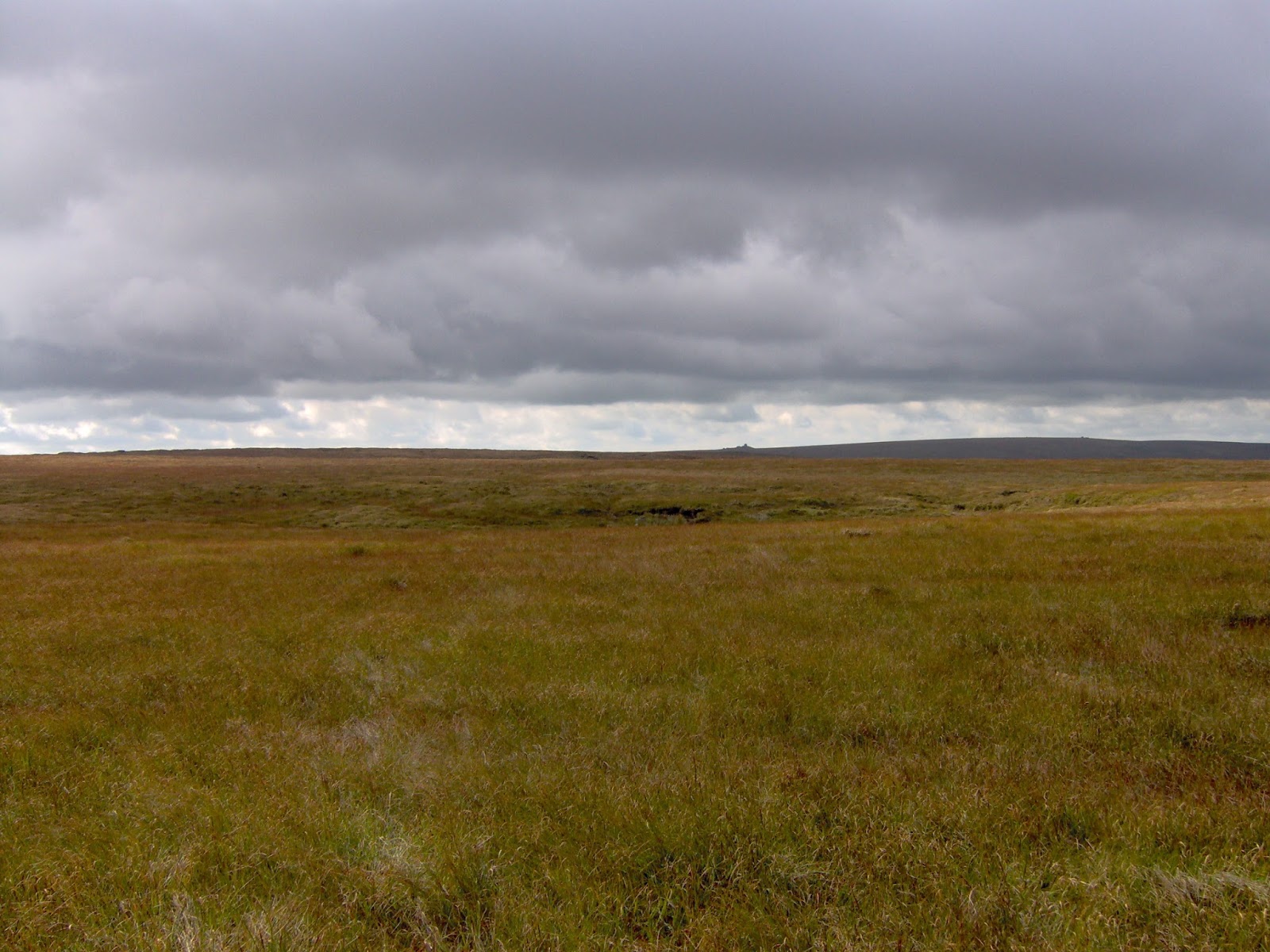
This Bronze Age burial happened nearly four thousand years ago in what is now the wild, empty middle of Dartmoor national park - a place that is very important to me. This view, taken near Whitehorse hill, shows what the area looks like:


Dartmoor landscape

In 2001, a walker found a small, rectangular burial chamber made from stones protruding from a remanent 'hag' of peat, which had been left standing as the peat surrounding it was cut away. These small stone boxes or chambers are known as kists, cists or kistvaens.

The erosion of the peat stack had uncovered the kist and one of the stones had fallen. The rest looked like it could also fall out at some point soon, so the decision was made to open the burial and see what was inside. This was even more exciting as most kists on Dartmoor have been excavated or robbed at some point but this one, having been hidden underground in a fairly remote part of the moor, was probably intact.


Whitehorse hill Bronze Age kist
Image by Cornwall Archaeological Unit, from https://www.archaeology.co.uk/articles/cist-whitehorse-hill.htm

In 2011, the kist was opened. Inside, well preserved by the peat (which excludes oxygen so preventing the decay of organic matter), was a bundle wrapped in an animal pelt, thought to be from a bear.

The contents of the bundle were the cremated remains of what is believed to have been a woman of high status, aged somewhere between 15 and 25 years old. The presence of a necklace and absence of weapons in the burial led researchers to think the deceased was probably female. She was buried in August or September (from the purple moorland grasses laid on the floor of the kist at the time). On top of these grasses was laid what looks like a woven belt or sash decorated with calfskin leather, then the wrapped cremation on that.


Apart from the remains, the wrapping held a woven bag made of lime bast (the fibres under the bark of a lime tree). This contained several objects: a necklace made from beads of clay, shale, amber and also a single bead of tin, a flint flake, a copper pin, a woven cattle hair band or bracelet decorated with small tin beads and two pairs of wooden discs. 


Image from https://new.devon.gov.uk/historicenvironment/latest-news/bears-and-beads-on-whitehorse-hill/
These wooden discs are the earliest examples of wood turning ever found in Britain. They could have been ornaments fitted into a leather bag or belt, but most people think that they were body ornaments, similar to modern ear expanders. They would have been worn in stretched ear piercings, or perhaps in lip, nose or cheek piercings. 

Some think that the smaller studs were perhaps the intermediate ones used as the hole was being stretched, before the larger ones were worn. Personally, I think they might have been worn at the same time as they show similar amounts of wear and were buried together.

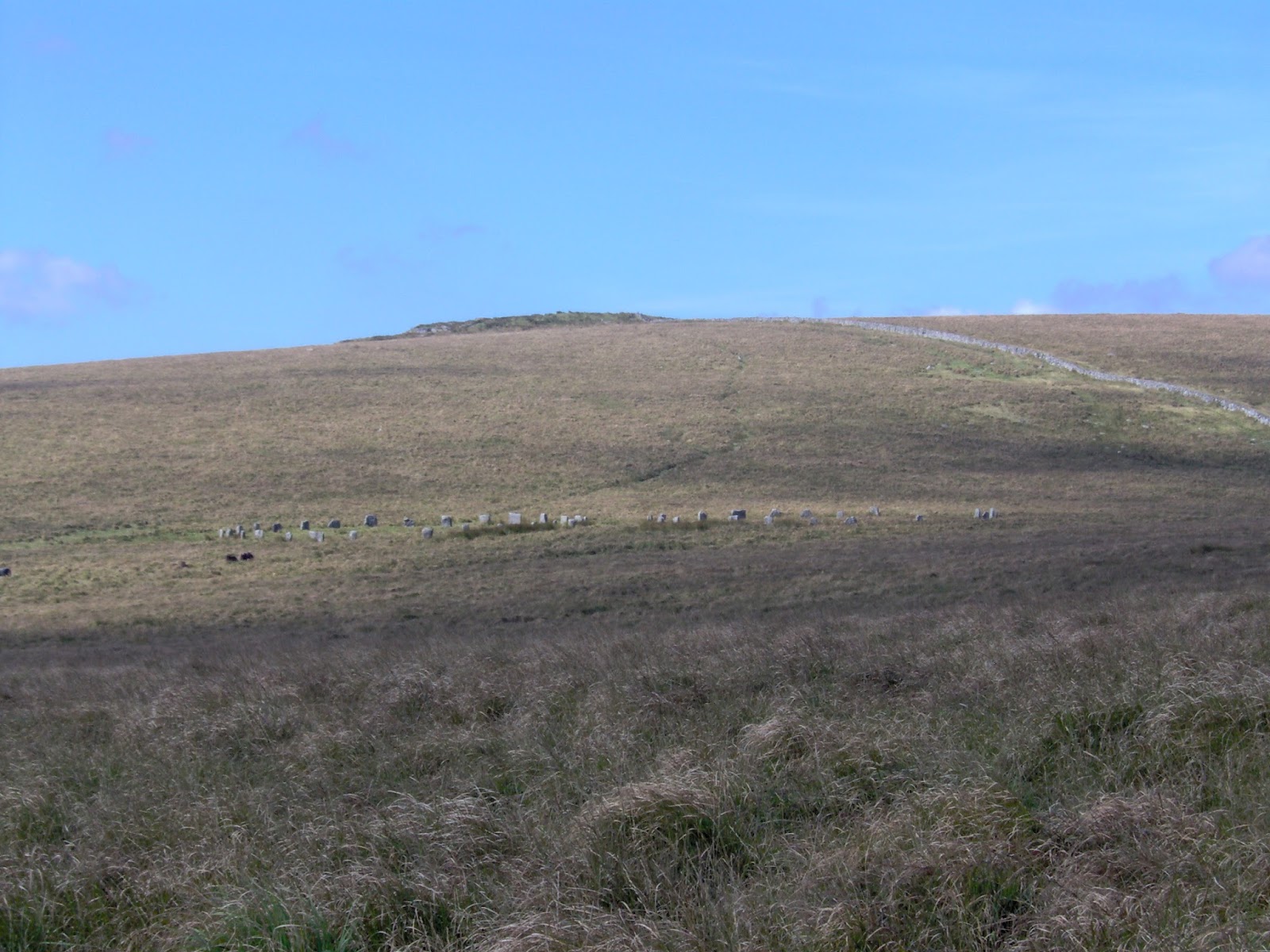
The wooden discs were turned from tough, pale coloured spindle tree wood, a native species which still grows around the edge of the moor. At the time of the burial, this area would have been much more wooded than now. It's strange to imagine what the person who wore these wooden ornaments was like; speaking a language that we wouldn't understand in the present day but perhaps knowing some of the many stone monuments, such as the double circle at Greywethers, that still stand not far from where they were buried and that we can still visit.


Greywethers stone circles on Dartmoor

Radio carbon dating from underneath the fallen stones of nearby Sittaford Tor circle returned a date of about four thousand years ago, so the circle itself is probably older than that. This means the person buried at Whitehorse Hill would have known it and probably visited it as well.

I couldn't resist having a go at recreating the discs myself! We have some idea of what Bronze Age woodturning was like, having images preserved from ancient Egypt. A note about the picture: the lathe would have been horizontal even though conventions in ancient Egyptian art mean that it's illustrated standing vertically.


Image from http://www.turningtools.co.uk/history2/history-turning2.html

These sources helped woodturner Stuart King to recreate the making of the wooden discs for a programme called 'Mystery of the Moor'.


I had to cheat a bit, as the method Stuart King used requires two people to work best and also because I don't have the appropriate reproductions of Bronze Age tools at the moment (although I'm very tempted to acquire or make some now!). It was still fun to make replicas of these objects that connect us to that ancient and mysterious time. 


woodturning

I had some seasoned spindle tree wood that was suitable, and the discs finished well. After turning, I put some natural nut oil onto them, to bring out the colour of the wood and stop them getting too grubby - a beeswax finish could originally have been used but it tends to attract dirt. The larger turnings are 25mm (1") and the smaller ones 15mm (0.59") in diameter.

Whitehorse burial wooden ear ornaments

Here's my friend Sion wearing a pair of discs very similar to those found in the kist at Whitehorse hill, but slightly larger than the bigger ones found in the burial at 30mm (1.18") wide. He said that they are very comfortable to wear and they were also tough enough to withstand a good deal of partying last weekend!


ear stretchers


ear expanders

Friday, 22 December 2017

Demonstrating relief carving techniques at a sign maker's trade fair - SignLink Live 2017

SignLink Live 2017

I've done many things as a woodcarver over the last twenty three years but one thing I've never tried is demonstrating at a trade fair. The chance to do so came in October with an invitation to carve at SignLink Live in Telford.


The stand was part of an area called 'Craftsman's Corner', where traditional skills related to sign making were demonstrated amongst all the vinyl cutting machines and other modern machinery associated with the trade. 

I used the opportunity to produce a charming commissioned piece that was requested just before the show began - a relief carving of a kitten in oak.


wood carving of a kitten


Apart from me, there were four other craftspeople showing their skills: Simon, of Nefarious Pinstriping, was doing pinstriping - a very exacting and skilful craft where precise lines and other designs are applied to surfaces. It is particularly associated with owners of motorbikes and hot rods.


nefarious pin striping


pin striping

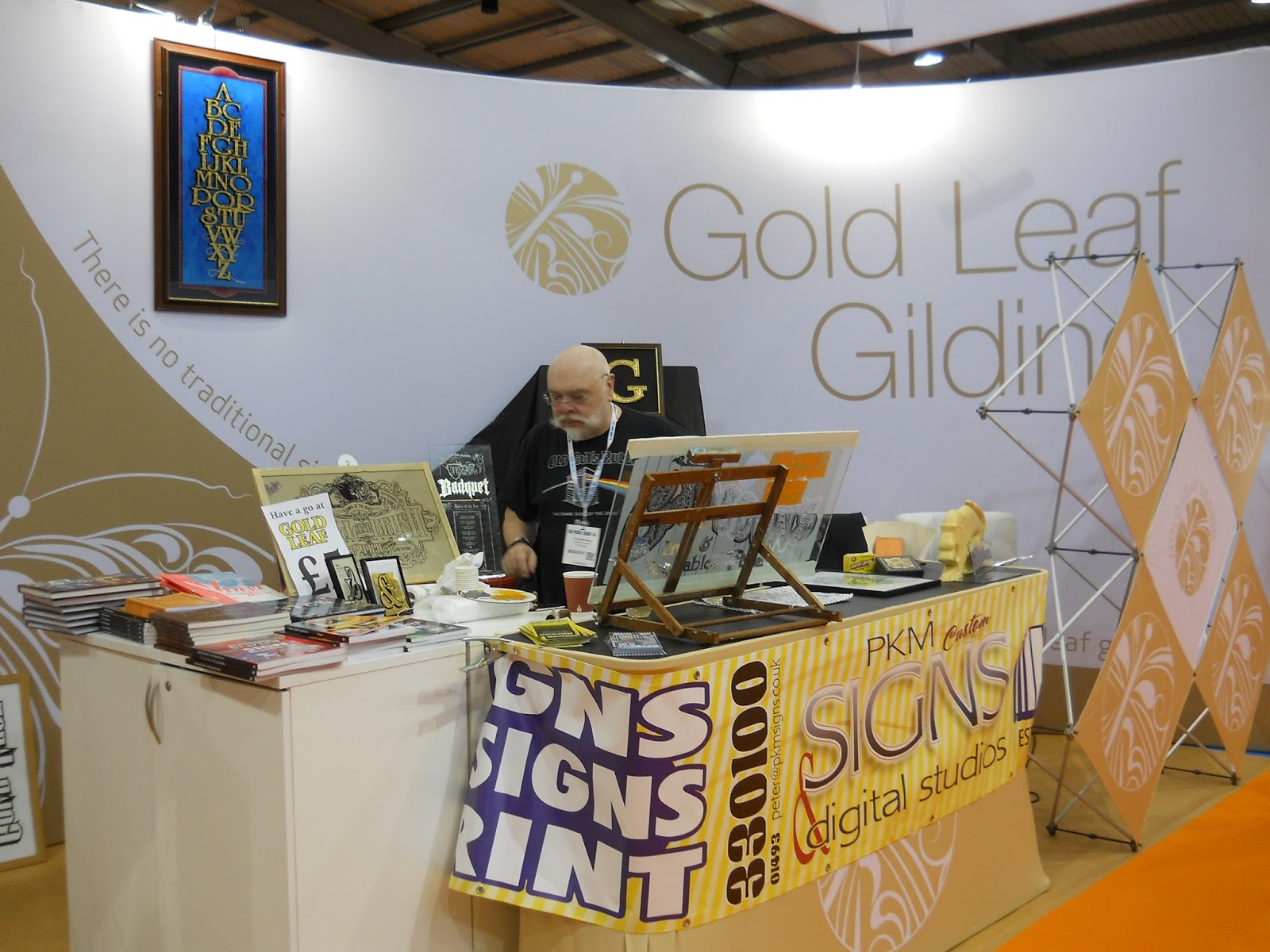
Pete, of PKM signs, demonstrated gilding techniques. I couldn't resist buying a copy of Mctaggart's 'Practical Gilding' from him!


Pkm signs gilding

On the fourth stand, Neil of H signs and Tim of Merlin Signs demonstrated traditional sign painting techniques. It was very interesting talking to them about which paints they prefer to use. One useful tip that they mentioned was to undercoat with aluminium oxide as it lasts the longest.


Tim of Merlin Signs at SignLink 2017

Neil Horne of H signs

It was great fun chatting with these folks, as well as interested people passing by. Quite a few visitors were keen to get pointers for their own hobby carving and I was happy to help! They also came along with their own tips and interesting ideas too, so it wasn't all one-way conversation by any means.

Many people also said how much they enjoyed having the contrast there between the modern advanced technology of sign making and the slower, precise ways of the older crafts. I hope to be able to participate in next year's planned 'Sign Show' in Birmingham. If you are in the sign trade, I may see you there!


Sunday, 28 May 2017

Seventeenth century carvings, filming locations and stories of ghosts at Chavenage house in Gloucestershire

Chavenage House

Chavenage House is situated near Tetbury in the Cotswolds. It may seem familiar to some readers, as it's been used as a filming location for many films and television series, including being Trenwith house in the most recent adaptations of Winston Graham's Poldark novels.

The house has only been owned by two families since the Dissolution of the Monasteries. The approach that you can see above is very much as it was left by Edward Stephens in 1576.

Edward's grandson was Colonel Nathaniel Stephens, who was Member of Parliament for Gloucestershire during the English Civil War. He was a somewhat reluctant party to the execution of Charles the First and Oliver Cromwell is said to have stayed in the tapestry-lined bedroom which can be seen on the first floor in the wing on the left in the photo above.


Cromwell's bedroom at Chavenage House

The picture of Cromwell on the wall staring down at the bed is more than a little creepy, as is the tiepin on display set with two clear crystals that cover pieces of the hair of Charles the First, which were cut from his head after it had been chopped from his body.


The adjoining bedroom is named after Cromwell's general and son-in-law Henry Ireton. It is also lined with tapestries and is full of Civil War weapons and armour, including these firearms:


civil war firearms

There is also a leather hat cover hanging on a wall, over what looks to be an Elizabethan or early Stuart carved over mantle:


A chair in the corner of the Ireton room is said to have been sat in by Nathaniel Stephens himself.

civil war chair

The house, and the Cromwell room especially, have many ghost stories attached to them.  On the website for Chavenage, one can read the well-known tale of the curse of the Stephens family:

'After the cessation of hostilities whilst Charles I was imprisoned, it became apparent to Cromwell that the King would have to be executed in order to stop any form of Royalist uprisings. To this end he sent Ireton to Chavenage, to try to persuade Colonel Stephens to add his support to the regicide. Ireton arrived whilst Colonel Stephens was keeping the festival of Christmas in 1648. Stephens, known as a mild man, had shown much irresolution in deciding upon sacrificing the life of King Charles I and was on the verge of wavering when Ireton reached his destination. It is said that they sat up all night and eventually Ireton obtained from Stephens his very reluctant acquiescence. 

Shortly after his daughter Abigail returned from having passed the New Year elsewhere, she, in a fit of horror and anger, laid a curse on her father for bringing the name Stephens into such disrepute. The story goes that the Colonel was soon taken terminally ill and never rose from his bed again. When the Lord of the Manor died and all were assembled for his funeral, a hearse drew up at the door of the manor house driven by a headless man, and the Colonel was seen to rise from his coffin and enter the hearse after a profound reverence to the headless personage, who as he drove away assumed the shape of the martyr King, Charles I - this being regarded as retribution for the Colonel's disloyalty to the King. Thereafter until the line became extinct, whenever the head of the family died, the same ghost of the King appeared to carry him off.' 

The Cromwell room has even been exorcised on the orders of the present owner's grandmother. Did I see anything there? I'm afraid not, although I would say that that room felt noticeably colder than the rest of the house (but that could just be due to it being at the end of a wing).

More carvings can be seen in the Oak Room, which dates to Elizabethan times and has carved panelling that is often dated at 1590. However, it clearly shows the date 1627, which was during the reign of Charles the First.  

I think that the representations of the musicians and dancers are some of the most beautiful carvings that I have seen from this period.


wood carving charles the first

More seventeenth century carvings can be seen in the Great Hall, which was also originally Elizabethan but was modified during the Stuart period.


stuart wood carving


There are some fine character heads on the wall of the chapel that is attached to the house. Apparently, this tower was built as a folly in the seventeenth century before being turned into the chapel.

stone carved face


Another folly can also be seen to the left of the driveway, hidden in the trees.


folly

I was lucky enough to be shown around on this visit by a friend who has visited the house many times as a locations manager on productions such as Wolf Hall, New Worlds and Poldark. Thanks to Leon and also to Caroline Lowsley-Williams, the current manager who very kindly gave us access to see the fascinating history and carvings of Chavenage.


chavenage house

Wednesday, 1 February 2017

A drum stool with a difference! Making carved wooden drums as seats

The story of this project begins last summer...

I had been invited to make some carvings for Gwalia farm near Machynlleth in North Wales, in return for a stay there at their stunning 'Cabin by the Lake'. This beautiful spot has a private lake, canoe and wood-fired hot tub.


Gwalia cabin by the Lake

Luckily, an oak tree on the farm had just dropped a large branch and so there was plenty of timber to carve!


The cabin was missing some nice seating around the fire, so by the end of the week I'd carved an owl stool...

carved wooden owl stool

As well as a stool with a carving of a Natterer's bat (as a few of them were flying around the cabin at dusk).The second stool also had slits cut into it, to make bars which made a note when struck. They are a bit similar to a West African 'krin' drum:


Natterer's bat carving in oak wood

Krin drum


I really liked the drum idea and showed a few people when back in Bristol. Jono at Touchwood Play realised that the drum stools would work very well in a new project that they were working on. After making a couple more examples to refine the idea, I was commissioned to make six of the stools.

First there was a trip out to Backwell, near Bristol, to look at the oak timber available. It had to be of a certain diameter to make a good stool. Once the logs were back at my workshop, the hard work began!


Bower Ashton woodyard

Firstly, the logs were cut to size, the bark removed using a mallet and chisel and then the stools were smoothed to remove tool marks. I used a chainsaw to cut the bars into the logs.


chainsaw carving

The bars then needed to be sanded and cleaned up, which took a lot of time. Once that had been done, I carved two rows of ridges onto each stool, to make an effect a little bit similar to an instrument called a 'guiro'.


krin drum stools

The drums still needed sticks to play them with. These were turned from locally-grown hornbeam timber. Hornbeam is a very tough wood, traditionally used to make butcher's chopping blocks and the teeth for large cogs, such as in mill workings. It was perfect for this job.


woodturning on an electric lathe

The sticks were chained onto the drums using good-quality stainless steel chain (as stainless steel doesn't react with and discolour oak, unlike normal iron or steel). There was also a hole drilled into each drum to hold the sticks when not in use. The chain is attached halfway along the stick to avoid it making a dangerous looping foot snare when stored in its holder.


The drums just needed a few coats of finishing oil and they were done. Using a tuning app on a phone, we also managed to find out what notes the different bars made. There was a surprising range! Quite a few were A or B, but one played three C notes with an octave between each. Others played Gs and Fs. You can hear them on this Youtube video:


I'd like to refine the tuning methods on future drums, although the tuning on these drums will probably change a bit over time anyway, as the wood dries.  

I did notice that small cracks in the oak, formed during seasoning, didn't seem to affect the sound much at all.


The drums will eventually be mounted in a circle onto a wooden platform in a play tower. They will be fixed down using large screws, so that they can't fall over or be thrown and injure anyone. To allow them to resonate and make a good sound, there will be rubber feet under each one. I've placed wooden sticks under them in these photos to allow a good resonance when playing them in the workshop.


carved wooden drum