As well as this blog, I also have a website and Instagram page with lots more images of my work as well as a few more stories.
If you like woodcarvings, you might want to have a look.
Showing posts with label pit saw. Show all posts

Thursday, 15 August 2013

Teaching woodcarving with the Carpenters' Fellowship and milling oak for the Matthew figurehead


On Tuesday, I packed my teaching sets of tools and a sleeping bag then headed over to Chelvey woodyard, near Bristol. There was a training week being run there by the Carpenters' Fellowship and I was invited to teach woodcarving skills. That's their logo above.

The Carpenters' Fellowship is an organisation that I'm a member of, which seeks to promote traditional timber framing skills. There were framers from various parts of Britain working on building a training centre at the woodyard from British Larch. It was also a chance for them to be assessed for official construction industry qualifications.


Learning woodcarving gave the participants a chance to see a different skill set and tools from those with which they were building the structure, as well as another skill to add to those that they were experiencing on the training week. It was also very interesting for me to see some of the tools that were used in framing, particularly the power tools, some of which I hadn't come across before.


The carving was on a piece of oak and shows the scene in the framing yard as the frame was being prepared for assembly. Hopefully, it will be fitted in some way into the finished structure as a 'date plaque'.


While at the woodyard, I was helped by Will Bolton to mill an oak trunk ready to become the figurehead for the ' Matthew'. The tree originally grew at Nether Stowey, on the Quantock hills in Somerset. It's great to be able to use local oak to make the figurehead and the timber and milling was very generously provided by Nigel Howe at Chelvey. Thanks also to Will for doing most of the hard work with the mobile sawmill.
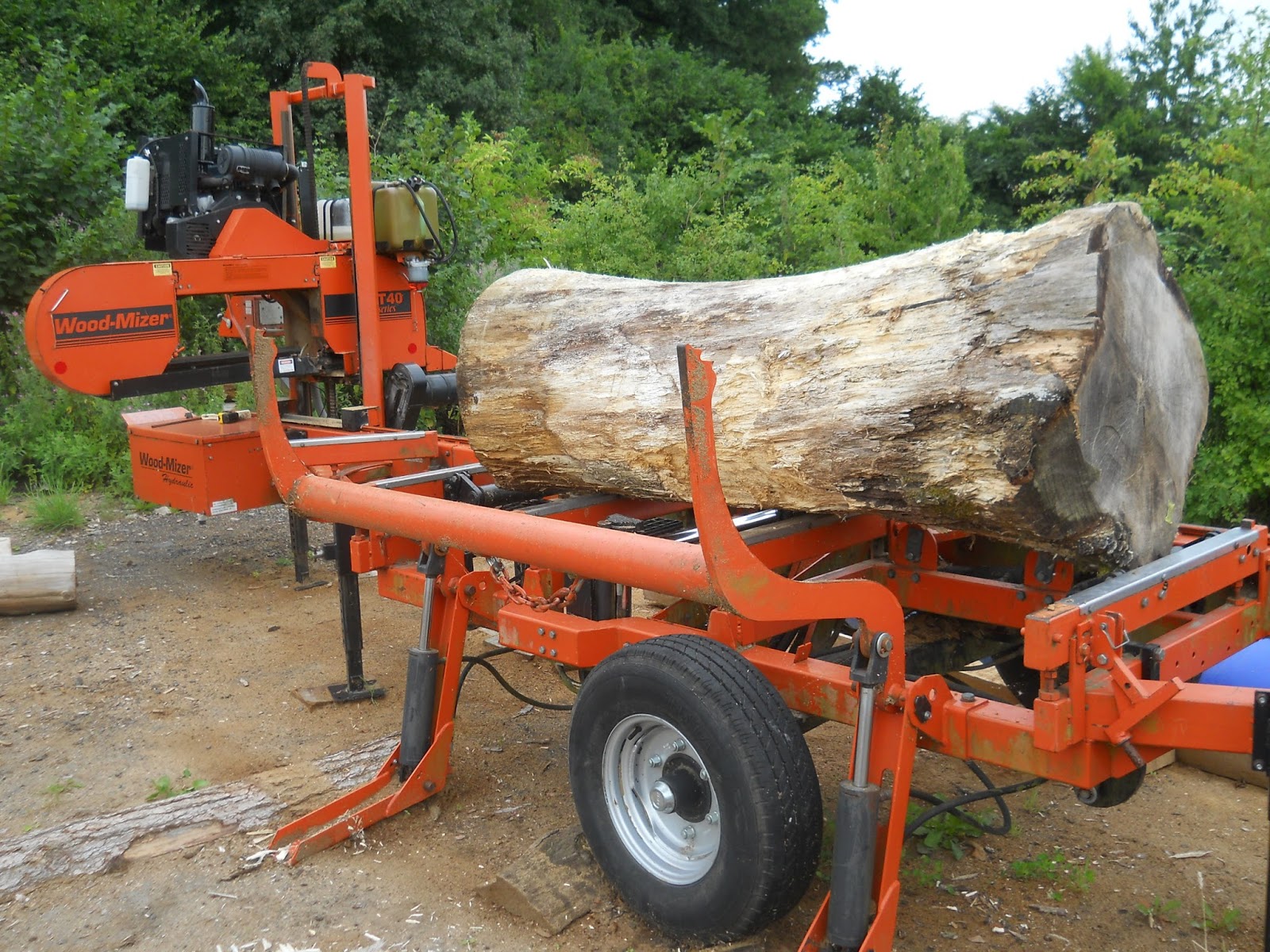

We used a Wood Mizer to do the milling. This is basically a horizontally-mounted bandsaw which moves on rails along a trailer bed. I suppose we could have used traditional medieval-style pit sawing methods to cut the trunk, but that's a heck of a lot of time taken, hard work and also skill. The Wood Mizer had the job done in a couple of hours.


Regular readers (thank you, by the way!) may recall that Lawson Cypress from Ashton Court in Bristol was to be used for the figurehead. I had got to the stage where the blocks were cut out ready to be carved. However the Cypress timber, though durable outdoors, didn't seem to have the strength to be able to withstand the battering that it would get at sea. Oak can take that kind of punishment and is also authentic for the period that the replica of the Matthew represents.


I am going to let the oak blocks dry for a bit and see how it responds, before roughing the figurehead shape out of the individual blocks and then letting it season further. This means that any movement in the seasoning timber can be accounted for when gluing the blocks together. Once glued, I'll be able to do the final finishing carving, hopefully using tools similar to those that a medieval shipwright would have used.


You can find out more about the Carpenters' Fellowship here:

Here are some previous posts about the Matthew figurehead:


Wednesday, 26 December 2012

Recycling in a 17th century Bristol building-a peek at post-civil war carpentry and pit sawing


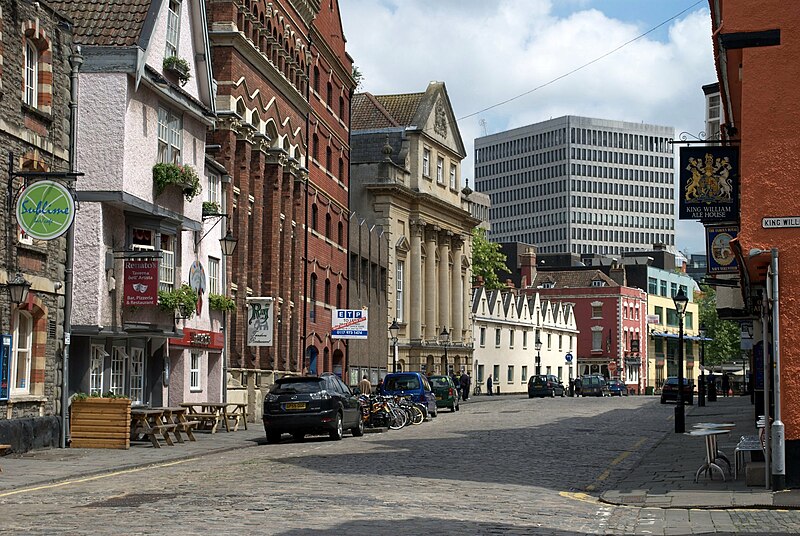
File:King Street, Bristol (June2010).jpg

A friend of mine has recently bought a building on King Street in Bristol. This cobbled street has a row of buildings on it which were built not long after the end of the English Civil War in about 1665. A group of us woodies went over to have a look around at Nigel's invitation.

It was very interesting seeing how the grade II listed building was put together and changed over time- the bays at the front sheared off and the frontage flattened in line with Victorian fashion, the peaks of the gabled roof at the front pushed back so that the frontage has a flat top in line with Georgian trends etc. The rear of the building shown above has the loading hatch put in when it was a Victorian warehouse.

One of the most interesting parts was seeing where some of the lathwork and plastering on internal walls had been stripped away, so that the original seventeenth century studding (the supporting timber framework) could be seen.


Bristol was devastated during the English Civil War in the 17th century, with sieges and high taxes bringing the city to it's knees. When these buildings were constructed it made sense to re-use building materials left about the place after years of war, rather than expensive new materials. The bits of wood in this photo show this. Some have been cut with saws in a sawpit*, but others have been hewn into shape with axes, and still show the marks. Some, like the bit top left, are strange shapes. This is because they came from much older damaged buildings or ships and were brought here to be cut into shape then fitted. They are still here centuries later.

'Make do and mend' indeed!

*When someone is in charge, we call them 'top dog'. When they have no power or little chance of success (e.g. in sporting events) we call them the 'underdog'. Ever wondered why?
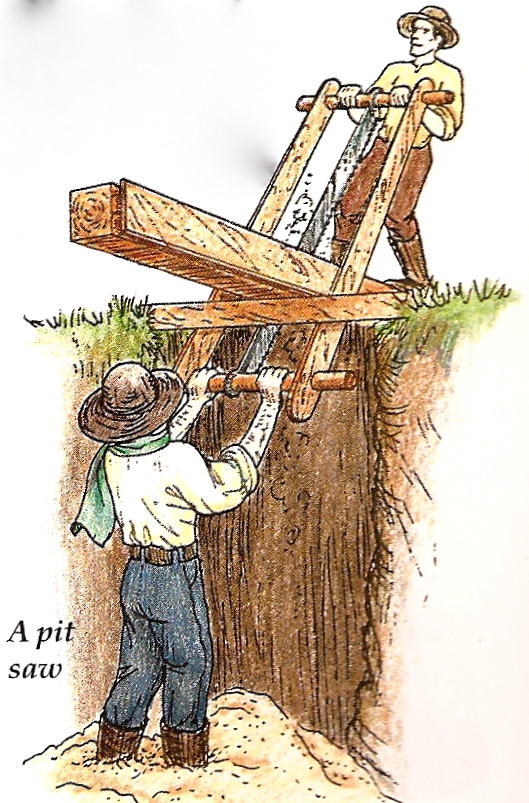
These terms come from the old way of sawing logs into timber. One person would stand in a pit across which the log to be cut would be laid. The other, more experienced, person would stand on top of the log and direct the cutting . Each would be holding a handle at an opposite end of a big two-handled saw. The man on top (or 'top dog') didn't have to work the saw as hard and stayed out of the mud and dust, whereas the 'underdog' in the pit would work much harder pushing and pulling the saw upwards, whilst being covered in sawdust and mud. Here's an image of one type of pit saw in use:


image from blog.carbideprocessors.com