As well as this blog, I also have a website and Instagram page with lots more images of my work as well as a few more stories.
If you like woodcarvings, you might want to have a look.
Showing posts with label Dorset. Show all posts

Thursday, 17 April 2014

Tout Quarry, Portland, Dorset. An open-air sculpture park full of artworks carved into the Portland and Purbeck limestones

tout quarry portland

Tout quarry is situated on the Isle of Portland in Dorset. Portland limestone is a very well-known building material and has been used in the construction of many iconic structures, including St Paul's Cathedral, the Tower of London and the British Museum in London and the UN building in New York.

Since 1983, the year after quarrying at Tout ended, stone carvers have made carvings there and many of them can be seen by visitors. The quarry is accessible for free at any time, so some of the early works have been vandalised or damaged, but there are over 70 that can be found by looking carefully around the network of quarry paths.


The quarry is now officially closed to new carvings being added to the rocks and is a nature reserve. Stone carving lessons are taught in a corner that has been set aside for tuition. We were lucky to visit on a beautiful sunny spring day and got some nice photos of some of the work at Tout. If you would like to visit the site, be aware that you will need some stout footwear as the ground is pretty uneven and also watch out for steep drops and falling rocks.  

I wish that it was possible to tell you who did every piece, but by the time we passed the information board above I was pretty lost myself!

still falling antony gormley

This is probably the most famous sculpture at Tout. It was carved by the well-known sculptor Antony Gormley and is called 'Still Falling'.


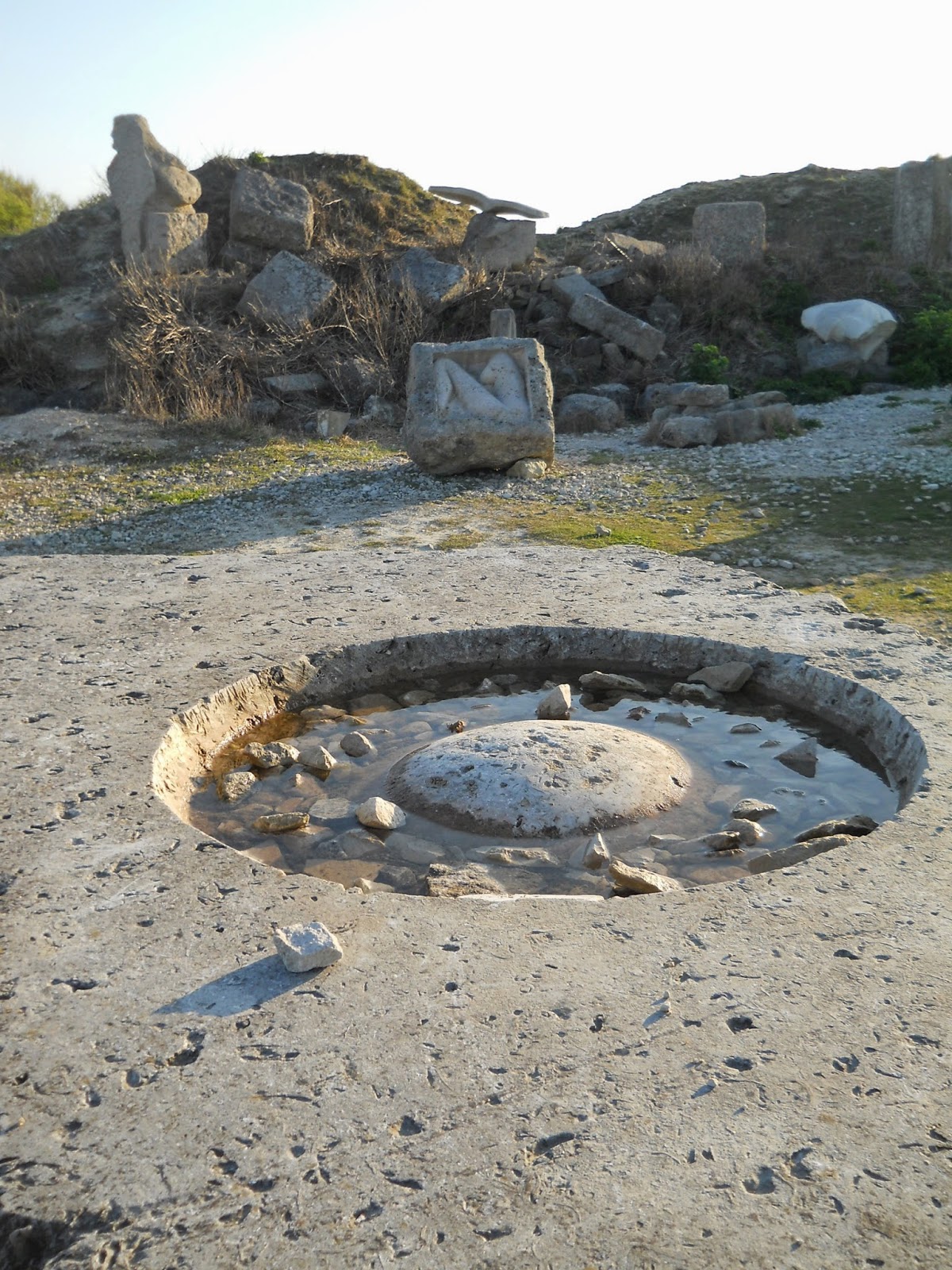
'Drinking Bowl' was carved by Jonathan Sells

'Fallen Fossil' by Stephen Marsden is one of my favourite sculptures at Tout...


...as are 'Ascent' by Joe Hamilton...


...and 'Window' by Justin Nicol, which really comes alive when the evening sun hits it.

Here are a few others that are hidden about the quarry. Many have been carved in secret, so the noticeboards won't tell you who made them.


A group of Dutch carvers called Groupe 85 come over every year and have special permission to work on some large sculptures in one corner of the quarry. 


This large sculpture of an octopus or kraken had traces of the crayon used to mark out the design still on it, so has been worked on fairly recently.

I hope that you have enjoyed this post, showing just a few of the many sculptures to be found whilst searching around Tout quarry. 


Friday, 14 February 2014

More extreme wood workshops for Touchwood Enterprises!

The last two days have been spent in Dorset, working with my friends at Touchwood Enterprises to deliver a bench and run carving workshops around it. Local children were invited to carve images onto the bench, which has been installed at Tucker's Field in Poole.


Unfortunately, the first day coincided with gale force winds and heavy rain sweeping across the area, so the carving sessions had to be cancelled in case our shelter blew away!


In the absence of anyone to teach carving to, Nick and I walked to the nearby seafront to have a look at it instead.


Surprisingly, there were no ice-cream sellers about so we walked back. We had managed to get some carving done on the now-soaked bench before the rain hit hardest. 


The next day, the bench had dried a bit and we had much better weather. About 32 young people from the area got the chance to try some carving and they seemed to really enjoy it.


By the end of the day, the seat was covered in carvings and everyone was happy. Hopefully, the bench in Tucker's Field will be enjoyed by local people for a long time to come.


Sunday, 11 August 2013

Two very different castles: Portland and Clun


Portland castle overlooks the harbour on the Isle of Portland in Dorset. It was built in 1539/40, by order of King Henry VIII, to guard the important anchorage there known as the Portland Roads. It only saw real action during the English Civil War of 1642 to 1649.

The building doesn't have the feel of a Tudor building from the outside, probably because the hard-wearing stone hasn't weathered too much. There's no timber framing visible either! The low profile of the fort made it harder to hit with cannon fire and the side facing the sea is rounded, so that cannonballs would be deflected off. 

We didn't have a chance to go inside, but you can and the building is looked after by English Heritage. 


Looking at the castle from the side facing towards the mainland, you can see the crosses in the wall through which defenders could fire towards the sea. The castle looks very small in front of the towering apartment blocks nearby, which were built for the Navy and also to house athletes competing in the sailing events at the recent Olympics.


The Isle of Portland is famed for it's limestone, which has been quarried for use in construction all over the world. The 'island' is connected to the mainland by a tombolo, a causeway of shingle that is part of Chesil Beach. In the photo above, you can see the flat top of the island, from the quarries that covered it.

Many of London's finest buildings are made of Portland Stone. As Portland castle shows, the stone from the best beds is hard but carves well and this is the material of choice for many British stone carvers. These carvings set into the wall by the Chesil Beach Visitors Centre are examples of such work:


This is the address for the English Heritage website page about Portland Castle:


Clun castle was already in ruins when Portland castle was being built. It is situated in the village of Clun in Shropshire, on the Welsh borders. The castle is thought to have been established by Picot De Say not long after the Norman invasion and was owned by the Fitzalan family for many years. 

The Great Hall built by them was impressive, but impractical. It is on the side of the motte, or mound, so would have been very vulnerable to being undermined during a siege. Eventually, the Fitzalans decided to spend their time on their more luxurious Sussex estate at Arundel and by the 16th century the castle was a ruin. 


Visiting Clun castle is still worth it though. The remains have a romantic, ruined grandeur about them and the area around is very beautiful.


The ruins of Clun castle are also looked after by English Heritage and their web page is here: