As well as this blog, I also have a website and Instagram page with lots more images of my work as well as a few more stories.
If you like woodcarvings, you might want to have a look.

Wednesday, 7 May 2014

Boiling Wells in St Werburghs, Bristol: Images from 2001 and 2014 - Spot the difference!

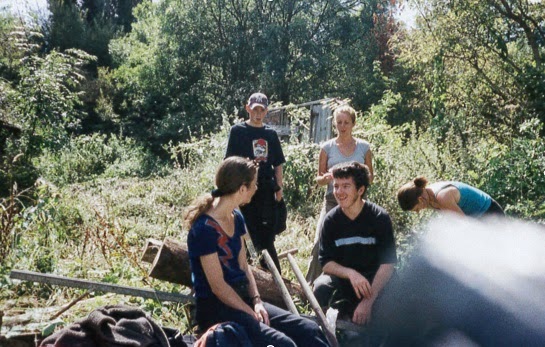
In the late summer of 2001, some photos were taken while work was being done at Boiling Wells. St Werburghs City Farm had just taken the site over on a lease from Bristol City Council and had started work on turning the derelict wasteland into a space for teaching and activities with young people.

Lots and lots of people from Bristol and further afield have visited this place and have a lot of affection for it, so here's some snapshots of that time for you to enjoy. Thanks to whoever took the original ones from 2001 and also to Jon Attwood, who gave them to the Farm.

I've taken photos a couple of weeks ago to show what I think is as close to the same view as possible,  although Boiling Wells has changed so much that it's guesswork for a couple of them! The images from 2001 are on the left, followed by those from 2014 after each on the right.


Monday, 5 May 2014

A new carved oak sign


This sign was carved from oak for someone who has worked for a long time with a scout group in, I believe, Chipping Sodbury. The lettering was cut using a Dremel hand drill but the scout emblem (shown below) was carved by hand using traditional tools.


Sunday, 4 May 2014

Demonstrating carving a Green Man from wood at 'Mayfest' on the Gloucester Road in Bristol


It was a beautiful sunny day yesterday and I spent it sitting on the pavement on the Gloucester Road in Bristol, carving a green man out of oak and chatting to passers-by.


A lot of younger spectators in particular were very keen to see how the carvings were done and there was a very jolly atmosphere, with the local shops putting out tables on the side of the road. In the afternoon, a morris group (see the comments below) came past with a huge 'Jack-in-the-Green', a foliage-covered effigy used since ancient times to celebrate the return of summer.


The green man plaque also turned out well and a finishing coat of furniture wax brought out the beauty of the oak grain pattern nicely. It will now go on show at Room 212 gallery on the Gloucester Road. 


After writing this, I reworked the Green Man carving a bit and you can see how it currently looks by visiting this post, which has some images of other Green Man carvings as well.

Thursday, 17 April 2014

Tout Quarry, Portland, Dorset. An open-air sculpture park full of artworks carved into the Portland and Purbeck limestones

tout quarry portland

Tout quarry is situated on the Isle of Portland in Dorset. Portland limestone is a very well-known building material and has been used in the construction of many iconic structures, including St Paul's Cathedral, the Tower of London and the British Museum in London and the UN building in New York.

Since 1983, the year after quarrying at Tout ended, stone carvers have made carvings there and many of them can be seen by visitors. The quarry is accessible for free at any time, so some of the early works have been vandalised or damaged, but there are over 70 that can be found by looking carefully around the network of quarry paths.


The quarry is now officially closed to new carvings being added to the rocks and is a nature reserve. Stone carving lessons are taught in a corner that has been set aside for tuition. We were lucky to visit on a beautiful sunny spring day and got some nice photos of some of the work at Tout. If you would like to visit the site, be aware that you will need some stout footwear as the ground is pretty uneven and also watch out for steep drops and falling rocks.  

I wish that it was possible to tell you who did every piece, but by the time we passed the information board above I was pretty lost myself!

still falling antony gormley

This is probably the most famous sculpture at Tout. It was carved by the well-known sculptor Antony Gormley and is called 'Still Falling'.


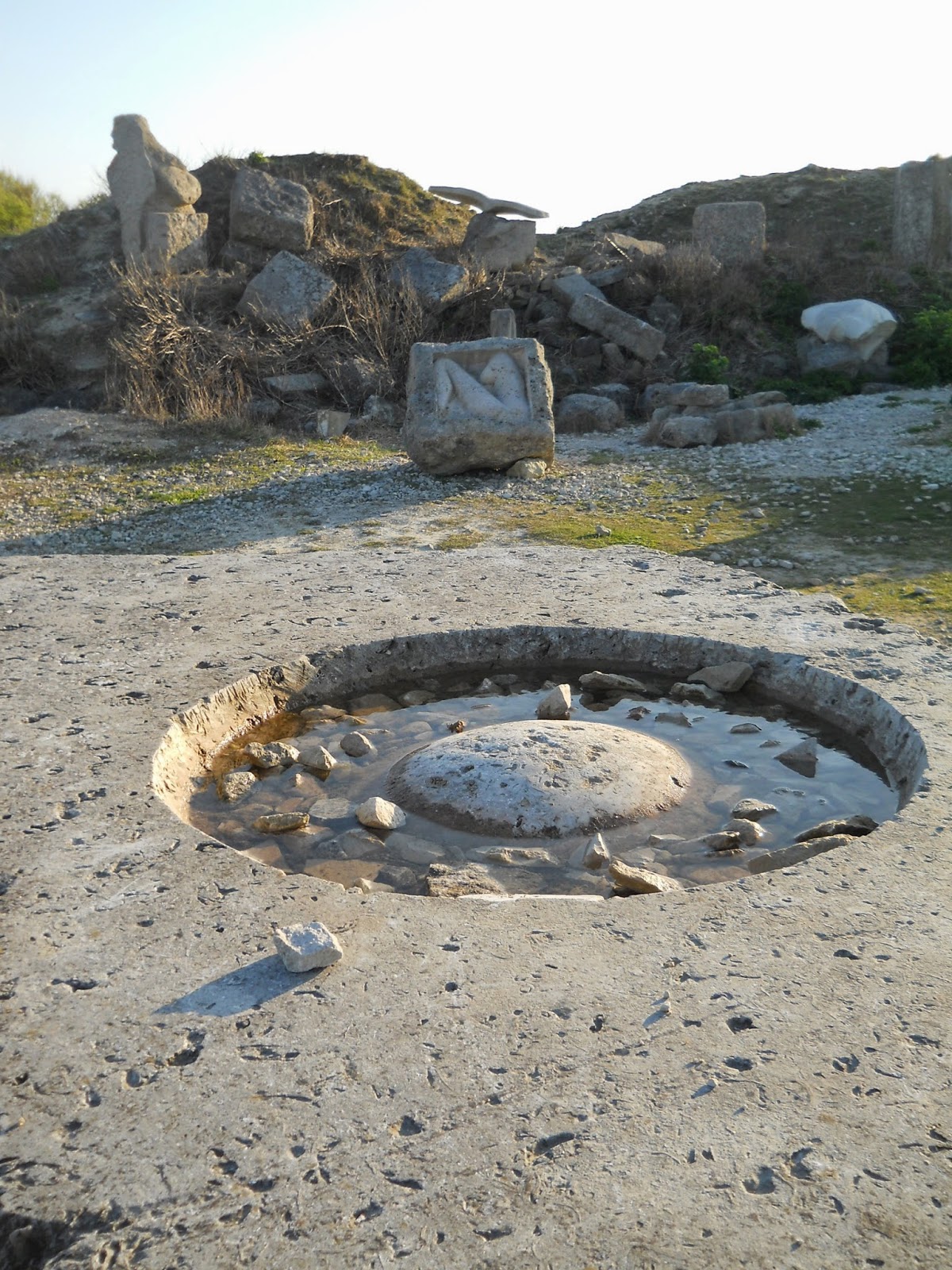
'Drinking Bowl' was carved by Jonathan Sells

'Fallen Fossil' by Stephen Marsden is one of my favourite sculptures at Tout...


...as are 'Ascent' by Joe Hamilton...


...and 'Window' by Justin Nicol, which really comes alive when the evening sun hits it.

Here are a few others that are hidden about the quarry. Many have been carved in secret, so the noticeboards won't tell you who made them.


A group of Dutch carvers called Groupe 85 come over every year and have special permission to work on some large sculptures in one corner of the quarry. 


This large sculpture of an octopus or kraken had traces of the crayon used to mark out the design still on it, so has been worked on fairly recently.

I hope that you have enjoyed this post, showing just a few of the many sculptures to be found whilst searching around Tout quarry. 


Balinese woodcarving tools

A friend recently returned from a trip to Bali and brought back some woodcarving tools that she purchased whilst there. Balinese woodcarvers are famous for their skill and the beauty of the work that they produce, so it's interesting to see the similarities and differences between these traditional carving tools and the European-style ones that I'm used to working with. Although this isn't the complete set, I thought it would be nice to share them with those of you who also have an interest in such things...


The chisels are designed to be mainly used with a small mallet (not shown, but similar to the one on the photo below) and are made from good-quality tool steel, without a wooden handle. The one on the right of the all-metal tools shown in the pictures is a flat chisel, the others have a slight sweep (curved cutting surface). They are tempered at the cutting end, so the edge is very sharp but the untempered steel behind it would give a bit of cushioning of blows and strength to the rest of the tool in use.

The gracefully shaped tool shown on the far right is very comfortable when held in the hand and is possibly the most unfamiliar-looking to a European carver. It functions a bit like a hook knife (or crooked knife). The blade is spear-shaped, with the point curled upwards. It also has a flat surface on one side and two cutting edges on the other, so that it can cut in either direction. This would be used to give a fine finish to the surface of a carving.

The axe is razor-sharp and feels great in use too. The haft (handle) looks as if it is made from Black Palm (also known as Black Palmyra) timber. This palm is commonly used throughout tropical Africa and Asia for a variety of purposes and the timber from the outer part of the main stem is dense and hard, becoming softer towards the centre. In this way, the palm is different from many other timbers that become denser towards the centre of the trunk.

Image by Jos Dielis from http://www.turisku.com/crafts/why-bali-handicraft/
As you can see from this photo, Balinese carvers tend to work sitting down and sometimes hold the wood being worked on between their feet. It's a method used all over the world but is quite different to the traditional European method, which involves standing at a bench or carving stand to work. I suppose that sitting on the floor wouldn't have been so appealing to medieval carvers in a cold, wet Northern European winter!

Tuesday, 8 April 2014

A Carved Inscription on Sue Darlison's 'Bridget's Smile' bench


Today, I went over to 'The Limes', a day centre for people with Alzheimer's in Bristol, to carve an inscription on a bench designed and made by Sue Darlison.

Sue is a very talented local designer maker as well as the curator of the 'Inspired' exhibitions, which have previously included some well-known exhibitors such as John Makepeace and David Colwell of Trannon furniture.

The bench is called 'Bridget's Smile,' as it was inspired by the smile of a lady who used to attend the centre. The seat and backrest are Cedar of Lebanon and the legs and backrest supports are Oak, all of which came from the local area.


I used a Dremel hand drill with a rotary burr to cut the letters, as it seemed to give a better effect with this font and also worked on the cedarwood more efficiently than hand tools, even very sharp ones.


The cedar gave a lovely smooth and polished finish when the lettering was finished, which can be hard to achieve when working on many other types of softwoods. Sue and I are sure that Bridget would approve.